
Do you ever wonder how far your child’s imagination can travel with a simple toy?
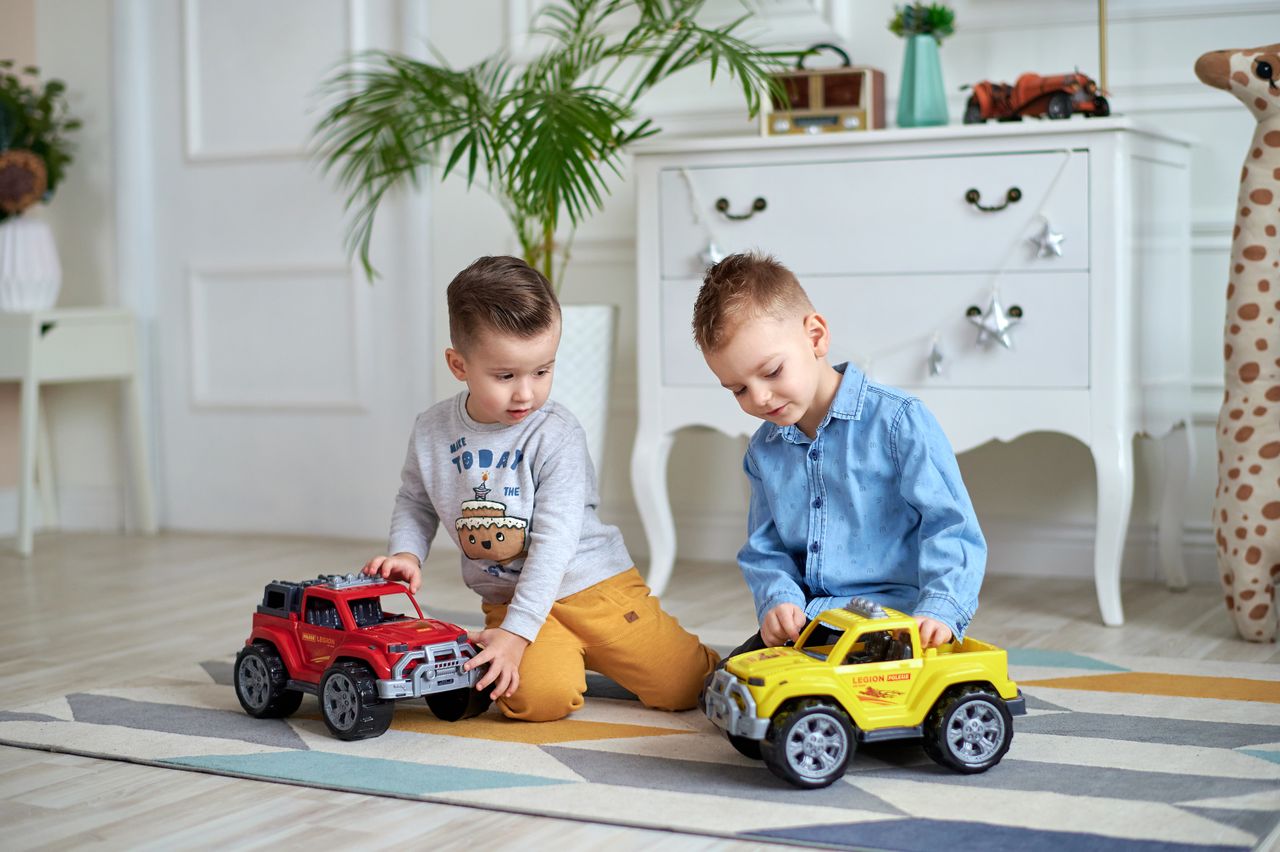
Toy cars may seem like a simple toy, but they can bring countless opportunities to support language development, communication, and socialization. Whether children are racing cars across the floor, creating a pretend city, or taking vehicles on exciting adventures, they are practicing important language skills while having fun.
For parents and caregivers of children with disabilities, toy cars can be an engaging and motivating tool to encourage communication, speech production sounds, vocabulary development, and social interaction. Because cars are often highly interesting to children, they can help create meaningful opportunities for learning through play.
Why Toy Cars Are Great for Language Learning
Children learn best when they are engaged and interested. Toy cars naturally encourage interaction, imagination, and conversation. Through play, children hear and use new words, practice taking turns, and learn to express their ideas.
Some language-rich opportunities during car play include:
- Naming vehicles (car, truck, bus, ambulance, tractor)
- Describing actions (go, stop, drive, crash, turn, park)
- Learning concepts (fast, slow, big, small, up, down)
- Practicing social language (my turn, your turn, let’s race)
- Building storytelling skills through pretend play
These experiences help children connect words with actions and real-life experiences.
The Power of Pretend Play
Pretend play is a natural way for children to develop communication skills. When children create stories with toy cars, they learn how to organize ideas, sequence events, and express themselves.
For example:
“First the red car drives to the store. Then it stops at a traffic light. Next, it helps a broken-down truck.”
This simple story uses sequencing words, action verbs, and vocabulary while supporting imagination and language growth.
Children who participate in pretend play often have opportunities to:
- Practice conversational exchanges
- Ask and answer questions
- Use descriptive language
- Develop problem-solving skills
- Strengthen socialization with peers and family members
“A great toy is like a good book. It opens up an array of possibilities…” — Mark Johnson
This quote highlights why simple toys often become powerful learning tools. Most toy cars do not need batteries, screens, or complicated features to inspire learning. Instead, they encourage children to create their own stories, explore new vocabulary, and engage in meaningful interactions. Every road, garage, traffic jam, or rescue mission created through play becomes an opportunity for communication and language development.
Building Vocabulary Through Car Play
One of the easiest ways to support language during play is by modeling vocabulary. Parents and caregivers can describe what is happening and add new words naturally.
Try Using Words Like: accelerate, reverse, garage, highway, passenger, mechanic, traffic, bridge, tunnel, or destination.
Children do not need to repeat every word immediately. Hearing words used repeatedly in meaningful situations helps build understanding and eventually supports expressive language.
Expanding Language
If a child says: “Car go!”
You can expand the message by saying: “The blue car is going fast!”, “The car is driving to the store.”, “Wow, the race car is speeding down the road.”
This strategy models longer sentences without placing pressure on the child.
Onomatopoeias to Support Speech Sounds During Play
Onomatopoeias refers to the naming of a thing or action by a vocal imitation of the sound associated with it, the creation of words that imitate natural sounds. Using onomatopoeias during car play can also be used to practice speech production sounds. Besides, it keep children engaged because vehicle sounds naturally encourage children to imitate and experiment with sound combinations.
Examples include: “Beep beep!”, “Vroom!”, “Zoom!”, “Crash!”, “Honk!”
These playful sounds can motivate children who are learning to communicate verbally. Repetition makes practice enjoyable and meaningful.
Tips for Parents and Caregivers
Here are a few parent-friendly suggestions to make the most of car play:
Follow Your Child’s Lead: Join the activity your child has chosen rather than directing the play. Shared attention creates more opportunities for communication.
Model Language Naturally: Talk about what you and your child are doing using simple, clear language.
Pause and Wait: After making a comment or asking a question, give your child time to respond in their own way.
Create Opportunities for Interaction: Hold onto a favorite car or place cars inside a container that requires assistance. This encourages requesting and problem-solving.
Celebrate All Communication: Respond positively to words, sounds, gestures, signs, or communication devices. Every attempt is meaningful.
Final Thoughts: Toy cars offer much more than entertainment. They can become valuable tools for developing language, encouraging socialization, building vocabulary, and supporting imagination through pretend play. By following a child’s interests and making play interactive, parents can create natural opportunities for communication throughout the day.
Remember that meaningful language learning often happens during simple everyday activities. A few toy cars, a little imagination, and shared playtime can go a long way toward supporting communication growth.
Parents: Do you want to learn more about language development, socialization, pretend play, and communication strategies? Let’s connect!!!! We’d love to hear about achievements or assist with any concerns that you may have.
Follow us on social media Facebook or Instagram for updates, tips, and information. Find our friends Tokapop on Teachers Pay Teachers for home programs and guides designed to support functional communication, made with the most care for parents, and is very easy to use, practical, and ready to implement.