Social language is simply how children connect with people through play, gestures, words, and little moments of back‑and‑forth. For kids under 5, these skills are growing quickly, even when it doesn’t always look like “talking.” Every point, every shared smile, every “Look!” is part of communication.
At Ola by Hello Sunshine ST, we love helping little ones build these early social communication skills so they can feel understood, confident, and connected.
1. Using Language for Different Purposes
Even before kids use sentences, they’re already great communicators. Children use verbal and nonverbal language to communicate variety of intents:
- Ask for what they want (“more,” “up,” reaching or pointing)
- Say no or show frustration
- Comment or share something exciting (“dog!” “uh‑oh!”)
- Ask simple questions
- Greet others with a wave or a smile
- Bring you into their world (“Look!”)
Whether a child uses words, gestures, signs, pictures, or AAC, it all counts as communication.
Under age 5, purposeful communication matters more than perfect speech.
2. Adjusting Communication to the Situation
Even toddlers naturally change how they communicate depending on the moment. You might notice your child:
- Uses a bigger voice outside
- Talks softer during quiet activities
- Looks to you for reassurance before approaching new people
- Gives more information when they want you to understand something (“Mama, look! Big truck!”)
As kids approach preschool age, they start learning early social “rules,” like saying please, waiting for a response, and noticing when someone looks confused.
These are huge social wins, even if the language is still growing.
3. Learning the Basics of Conversation
Conversation with young children is simple but meaningful. Before age 5, kids start to:
- Take turns in play (“my turn, your turn”)
- Respond when someone talks to them
- Stay with a topic for a short time
- Begin short back‑and‑forth exchanges
- Notice when communication breaks down (“Huh?” “What happened?”)
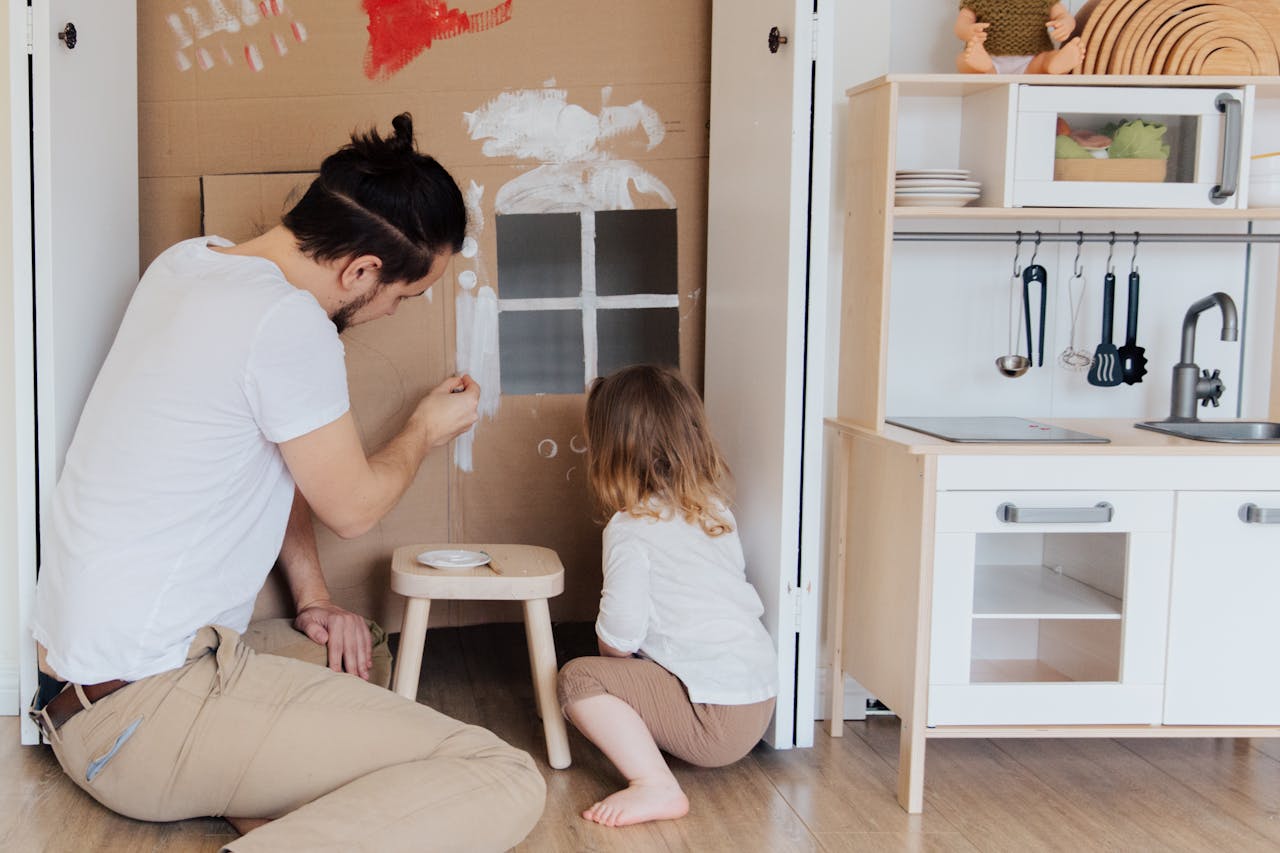
Even stacking blocks together or rolling a ball back and forth is early conversation practice.
4. Using and Understanding Nonverbal Communication
Young children communicate with their whole bodies. Some of the biggest milestones happen without a single word:
- Eye gaze and shared looks
- Facial expressions
- Pointing to show things
- Handing you items
- Gestures like waving or clapping
- Knowing how close or far to stand
- Following your eyes or pointing finger (joint attention)
These skills are the foundation for later conversation and social understanding.
5. Understanding Simple Social Situations
Even before preschool, children are learning how the social world works. This might look like:
- Figuring out how to join play
- Taking turns with toys
- Following simple group rules
- Noticing how someone feels
- Asking for help
- Using “stop” or “all done” appropriately
By ages 4–5, children begin solving small social problems, like asking for a turn or checking in when someone is sad.
How Ola Supports Social Language Development
Young children learn best through play, connection, and warm, responsive interactions. Our speech-language therapy sessions are:
- Play‑based
- Child‑led
- Functional
- Focused on real‑life communication
- Supportive of all communication styles (spoken words, gestures, AAC)
Every child’s journey is unique, and we’re here to guide parents as much as we support children.
If you’re noticing challenges in your child’s social communication or just want another set of eyes, we’d love to help. Let’s connect! We’d love to hear about your child’s achievements or assist with any concerns that you may have.
Let’s connect!
If you’re noticing challenges in your child’s social communication or just want another set of eyes, we’d love to help. We’d love to hear about your child’s communication wins and assist with any concerns that you may have.