
The Ball Could Be Considered One of the Most Powerful Tools in Communication
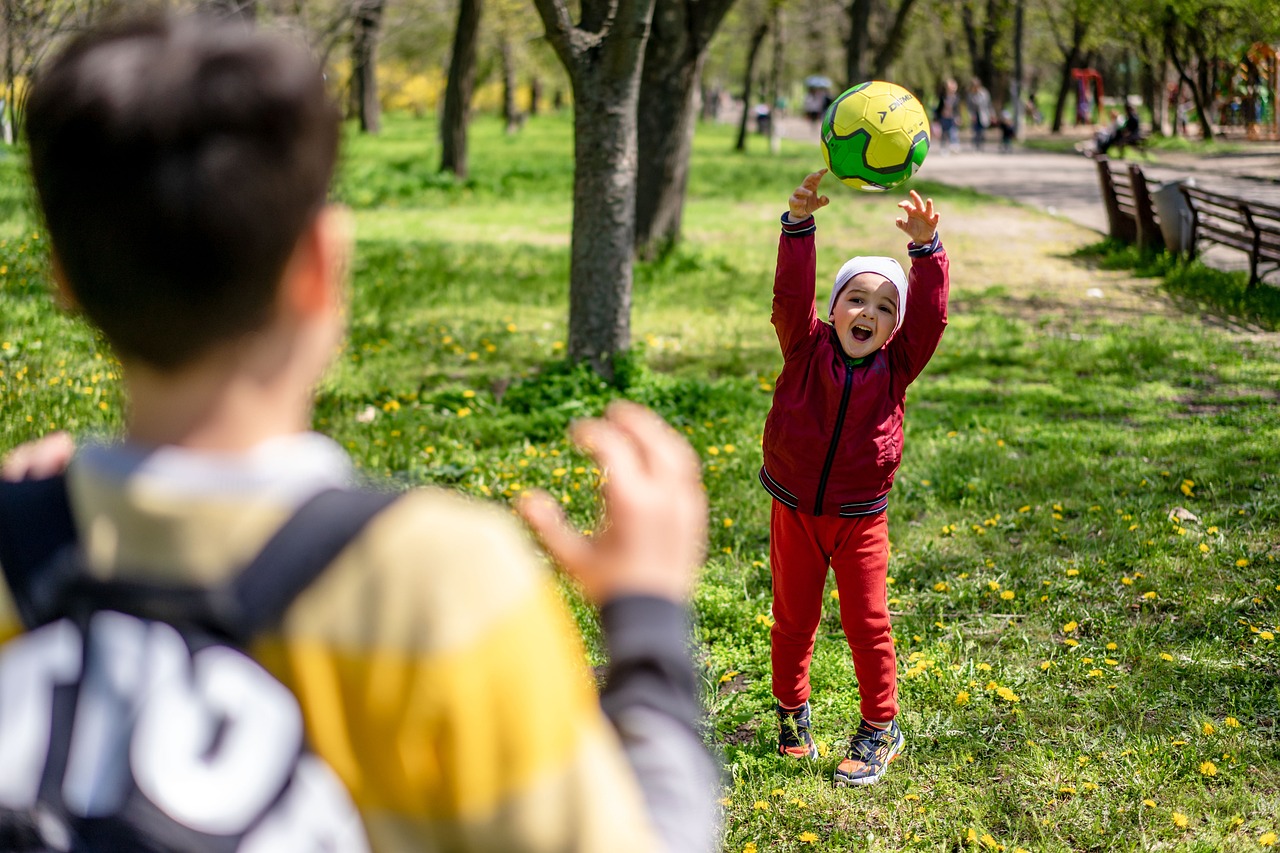
The simple act of throwing a ball back and forth is more than play, it mirrors the very rules of conversation. Just like communication, it requires turn‑taking, listening, waiting, and responding. One person throws, the other catches. Back and forth. Again, and again.
In communication, this rhythm is essential. That is why, in speech therapy, one of the most versatile and powerful tools we can use is something most children already know and love: a ball.
Balls are one of the most familiar and popular toys in a child’s world. They appear even before birth, at baby showers, on baby blankets, in nursery décor, and on children’s clothing. It is no surprise that the word “ball,” images of balls, and the actual toy is used in most language assessments for young children. The word ball is commonly paired with the letter B when teaching the ABCs, appears in most (if not all) First Words books, and is listed among the earliest vocabulary words in standardized language assessments such as The Rossetti Infant-Toddler Language Scale.
The Ball as a Foundation for Communication
“Shooting the ball is part of the game. Everybody can shoot in their own way. Not everybody can make it. But everybody can shoot.” — Stephen Curry
There is no right or wrong way to play. While activities like catch and throw do require certain physical skills, such as eye‑hand coordination, strength control, and bilateral coordination, the goal in therapy is not perfection. The true value lies in the interaction.
The repeated act of throwing and catching a ball always reminds me of the heart of conversation: the back‑and‑forth exchange. One person initiates, the other responds. Then roles switch.
Because balls are familiar, motivating, and easy to use, they are often introduced early in speech therapy. Most children already know what a ball is and how it works. That familiarity allows therapists to build new language skills on an existing, comfortable foundation.
One of my current favorite therapy tools is an indoor foam ball. It is soft, lightweight, and bouncy, making it perfect for passing conversational turns, encouraging responses, supporting imitation of words, and helping children stay engaged and on task.
A ball naturally encourages:
- Turn‑taking
- Joint attention
- Social interaction
- Cause‑and‑effect understanding
These foundational skills support success not only in therapy, but in everyday life.
Why Balls Are So Effective in Speech Therapy
- Versatility Across Ages and Skill Levels
Balls can be used:
- Alone or with others
- In structured therapy activities or free play
- Indoors or outdoors
Children can learn a great deal through independent play, but playing with another person adds a powerful social‑communication component that supports language growth.
2. Endless Vocabulary Opportunities
Balls come in many sizes, colors, textures, and purposes, making them ideal for vocabulary expansion.
With balls, we can target:
- Colors: red ball, blue ball, striped ball, dotted ball
- Categories: sports balls (basketball, baseball, tennis ball)
- Concepts: same/different, more/less, big/little
- Describing words: big/small, soft/hard, smooth/bumpy, light/heavy
3. Learning Verbs Through Play
Each type of ball naturally introduces action words:
- Basketball: bounce, throw, shoot, catch
- Baseball: hit, throw, catch
- Tennis ball: serve, bounce, hit
- Beach ball: blow, pump, inflate, deflate
Verbs become meaningful because children experience the action, rather than simply hearing the word.
Building Basic Concepts with a Ball
Balls are excellent for teaching early concepts that support language comprehension:
Spatial Concepts
- On the chair / under the chair
- In front of the car / behind the car
- Walk around the ball
Direction and Control
- Bounce the ball high / low
- Roll the ball fast / slow
- Throw the ball hard / soft
Quantity and Size (using a manual air pump)
- More air / less air
- Bigger ball / smaller ball
- Heavy ball / light ball
When learning is physical and visual, children are more likely to understand and remember new language.
Texture, Sensory Input, and Language. Balls also vary in texture:
- Rubber and hard
- Soft and squishy
- Fuzzy or smooth
- Leathery or bumpy
These differences allow therapists (and parents) to introduce sensory vocabulary while supporting children who benefit from hands‑on, movement‑based learning.
✅ Final Thoughts
A ball may seem like a simple toy, but in speech therapy it becomes a powerful bridge to communication. Through ball play, children learn how to take turns, use words, follow directions, and connect with others. When language is paired with movement and joy, learning becomes meaningful and lasting.
Remember B.A.L.L.
B – Back‑and‑forth interaction
A – Attention & joint engagement
L – Language development
L – Learning through play
Parents are essential communication partners. Do you want to learn how to use toys like the ball to support your child’s speech and language development at home, or would you like to share your experience?
Let’s connect! We’d love to celebrate your child’s progress or support you with any concerns.
Follow us on Facebook or Instagram for updates, tips, and evidence‑based strategies.
Visit our friends Tokapop on Teachers Pay Teachers. Soon we will upload the perfect companion resource. Tokapop’s resources are free and will support functional communication, parent‑friendly, and ready to use. It will go with this blog like bat and ball!
Do you want ball game ideas to play with your children?