
Blocks may look like simple toys, but within speech language therapy, they are purposeful tools that support functional communication, language development, and social interaction.
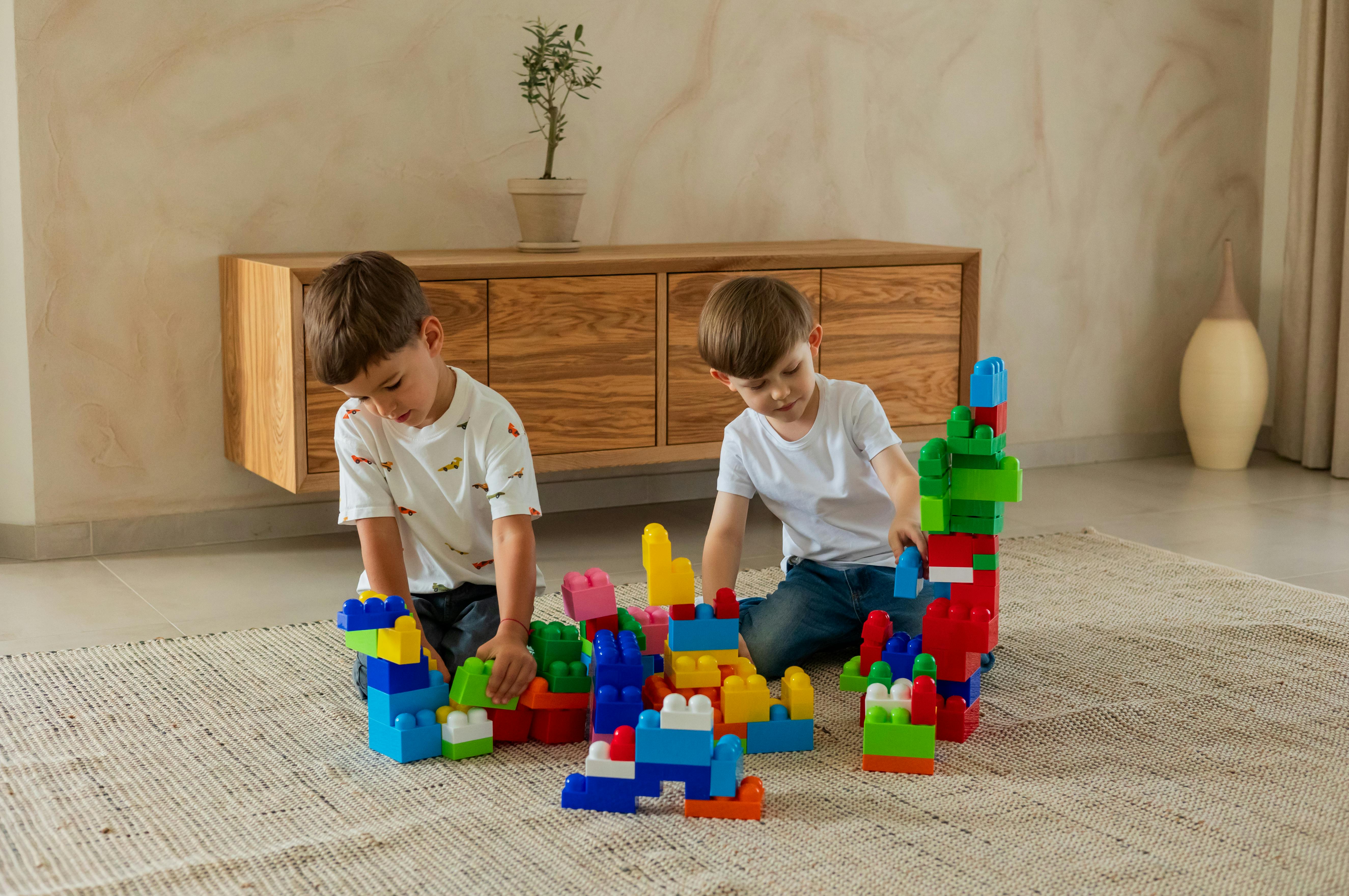
According to ASHA, play‑based intervention principles, children learn best through meaningful, motivating activities. When children stack, knock down, and rebuild with blocks, they are practicing joint attention, turn‑taking, requesting, commenting, and following directions—all foundational communication skills.
Play with blocks allows therapists and caregivers to target individualized goals while honoring the child’s developmental level, interests, and communication style.
Why Blocks Work in Speech Therapy
Blocks align naturally with evidence‑based practice in speech‑language pathology, which emphasizes:
- Play‑based learning
- Child‑led interaction
- Functional and meaningful communication
Blocks are open‑ended, motivating, and adaptable across developmental stages. They support both expressive and receptive language, encourage problem‑solving, and provide natural opportunities for social communication without pressure or rote drills.
Blocks support functional communication by embedding speech and language goals into natural, play‑based interactions.
How to Use Blocks to Increase Speech and Language Skills
Speech Sound Production and Clarity: Assign one block per correct sound or word production, build a structure while practicing target sounds and use block play as positive reinforcement. Practice early‑developing sounds to target like bilabials: /b, p, m/ and alveolars: /t, d, n/. Functional words: block, build, up, pop, big.
Fine Motor Skills + Communication: Block play supports multisensory learning, which is recognized as beneficial for young learners. Encourage stacking, aligning, pushing, and grasping, pair motor actions with language models (push, turn, on, off), and narrate the child’s actions to model expressive language. This approach supports fine motor development, language comprehension, and expressive communication simultaneously.
Turn‑Taking and Social Communication Skills: Blocks are ideal for targeting pragmatic language skills. Take turns placing blocks to practice reciprocal interaction, model social language such as my turn, your turn, wait, go, and support eye contact, shared attention, and engagement.
Motivation Breaks and Regulation: Blocks can be used as planned movement or sensory breaks while maintaining therapeutic value. Offer short block play breaks between structured tasks, allow tower knock‑downs as a motivating reward, and keep breaks purposeful, brief, and child‑centered.
Final Thoughts
Blocks are more than toys—they are evidence‑based tools that support speech, language, social communication, and motor development when used intentionally. Rooted in play‑based therapy principles, block play empowers children to learn through connection, movement, and meaningful interaction.
So next time a speech therapist says, “Let’s play with blocks,” know it’s more than play—it’s building communication practice.
Do you want to build your own blocks?
This would be a great activity to do with children. You would be reusing recyclable material, spending quality time with your children, building communication in the process and finally your child will have a “new” toy. Visit Kiwico for instructions on how to make your own building blocks.
References
American Speech‑Language‑Hearing Association. (n.d.). Early Intervention. https://www.asha.org/practice-portal/professional-issues/early-intervention/
American Speech‑Language‑Hearing Association. (n.d.). Spoken Language Disorders. https://www.asha.org/practice-portal/clinical-topics/spoken-language-disorders/
American Speech‑Language‑Hearing Association. (n.d.). Social Communication Disorder. https://www.asha.org/practice-portal/clinical-topics/social-communication-disorder/
American Speech‑Language‑Hearing Association. (n.d.). Evidence‑Based Practice in Speech‑Language Pathology. https://www.asha.org/research/ebp/
Parent Notes
Parents are essential communication partners. Do you want to learn how to use blocks to support your child’s speech and language development at home, or would you like to share your experience?
Let’s connect! We’d love to celebrate your child’s progress or support you with any concerns.
👉 Follow us on Facebook or Instagram for updates, tips, and evidence‑based strategies.
✨ Visit our friends Tokapop on Teachers Pay Teachers. Soon we will upload the perfect companion resource. This free resource will support functional communication, will be parent‑friendly, and ready to use. It will go with this blog like macaroni and cheese!