
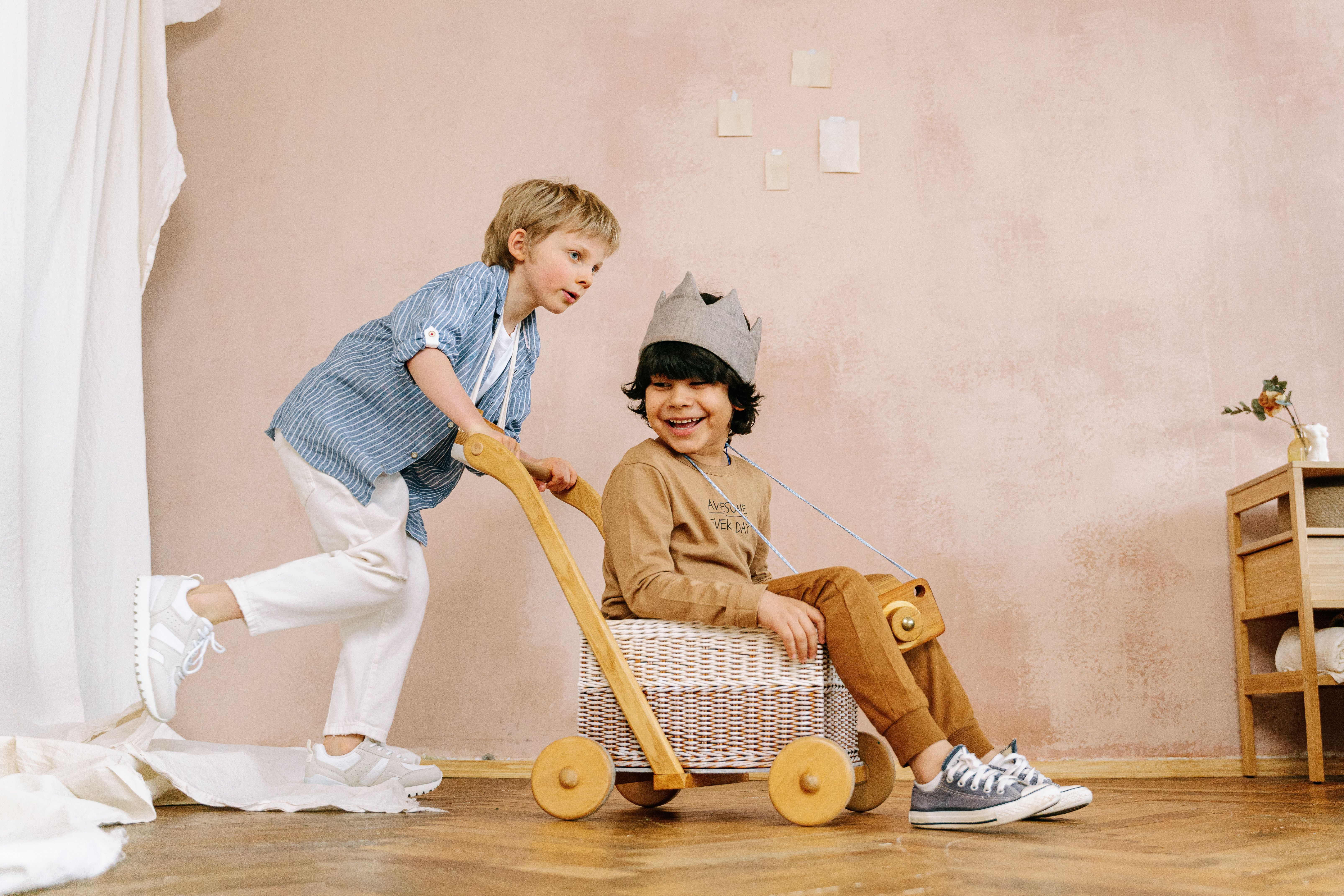
Language = Connection.
Language is more than words, it’s how we connect, learn, and share our ideas. For children, language development is a key part of growth, especially when building social and learning skills. Understanding how language works can help parents better support their child’s communication journey.
What Is Language?
Language is the ability to understand and use communication systems. This includes:
- Spoken language (listening and speaking)
- Written language (reading and writing)
- Other systems, like American Sign Language
It’s important to note that language differences (dialects) reflect cultural or social variations—not disorders (ASHA, 1993).
Language is divided into:
- Receptive language: understanding (listening, reading)
- Expressive language: sharing ideas (speaking, writing)
Some children may also use augmentative or alternative communication (AAC) to support communication.
The Five Building Blocks of Language
Language is made up of five interconnected domains:
- Phonology: speech sounds (e.g., identifying sounds in words)
- Morphology: word parts (e.g., “-ing,” plurals)
- Syntax: sentence structure
- Semantics: meaning of words and vocabulary
- Pragmatics: social use of language
These domains work together across listening, speaking, reading, and writing to build a complete communication system. *Click on the purple word to learn more about each domain.
From Sounds to Socialization: Why It Matters
“The limits of my language mean the limits of my world.” ~ Ludwig Wittgenstein
Children begin learning language long before they speak their first words. Early communication develops through gestures, facial expressions, and the sounds they hear in their environment. During the first year of life, children focus on listening to and experimenting with sounds like babbling, imitating, and learning how sounds combine. Over time, these sound patterns begin to carry meaning, forming the foundation for words.
By the second year of life, children start combining two or more words and modifying them with additional sounds. This allows them to express needs, wants, and ideas more effectively. Their language becomes more intentional and functional, reflecting a growing understanding of how communication works.
In the third year, children refine and expand these skills. They become more proficient at communicating their thoughts, describing their experiences, and interacting with others. Speech becomes clearer, and their sentences grow longer and more complex.
As children continue to develop, their language skills move beyond basic communication. They begin to understand humor, make inferences, and interpret figurative language. They also start to monitor and reflect on their own understanding. These higher-level abilities rely on metalinguistic awareness which is the ability to think about language itself, including its structure, meaning, and use.
This progression from sounds to complex communication highlights how language is deeply connected to social interaction. Strong language skills not only support communication but also play a crucial role in socialization, learning, and building relationships.
When There Are Difficulties
A language disorder affects how a child understands or uses language. This may involve:
- Form (sounds, grammar)
- Content (meaning)
- Use (social communication)
Language disorders can occur on their own or alongside other conditions and may change over time.
Tips for Parents
- Talk, read, and play daily
- Model clear, simple sentences
- Encourage turn-taking in conversations
- Expand on your child’s words (“car” → “Yes, a fast red car!”)
- Celebrate all communication attempts
Final Thoughts
Language is a dynamic system that grows with your child. By understanding its components, parents can better support communication development in fun, meaningful ways. Every small step, every sound, word, and gesture matters.
Parents: Do you want to learn more about language development or share your child’s progress? Let’s connect!!!! We’d love to support you and celebrate your child’s communication journey.